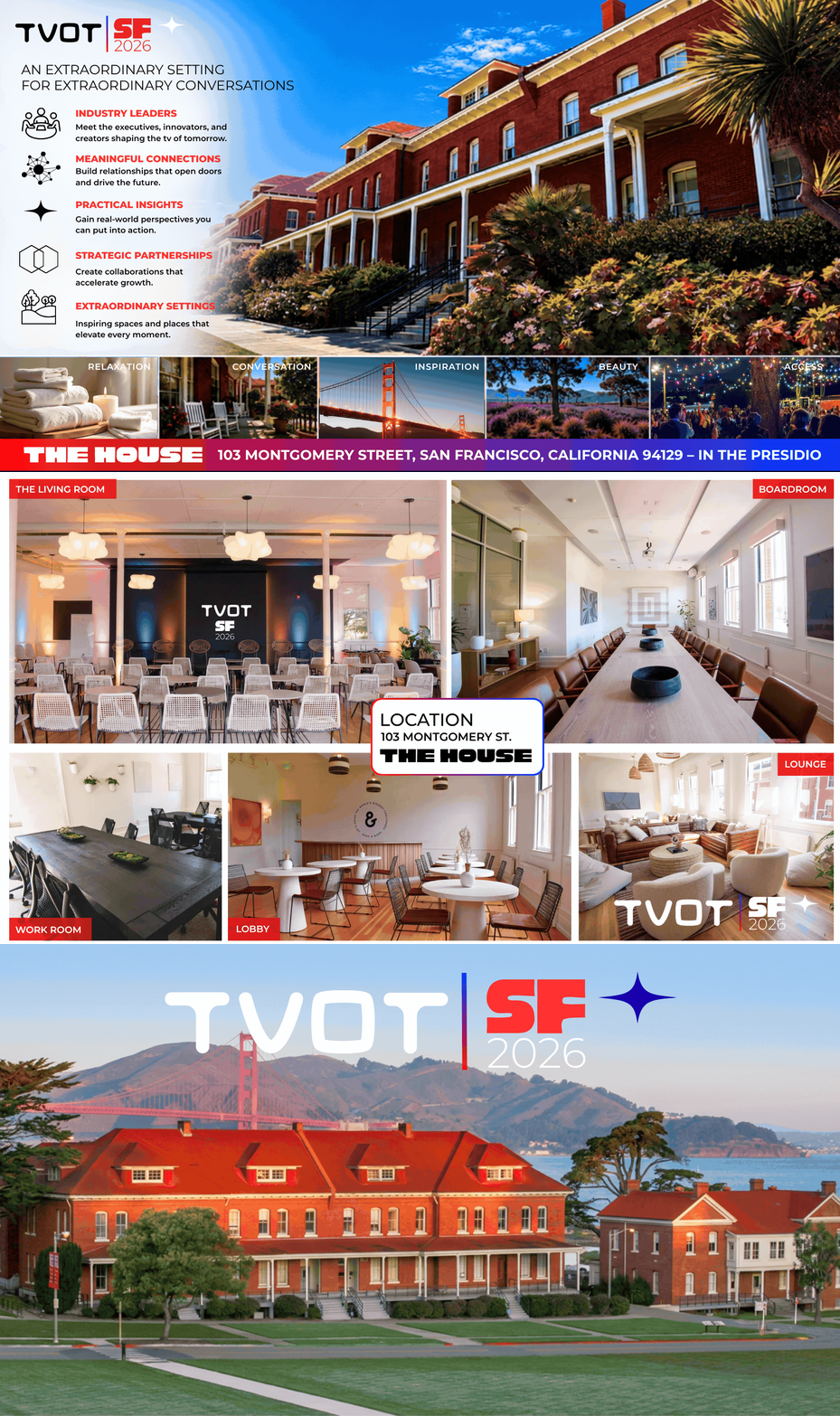
ITVT/TVOT is pleased to announce that the next TV of Tomorrow Show, TVOT SF 2026, will take place in San Francisco, December 2nd and 3rd. Click here to reserve your tickets.
REGISTER HERE

Building on our recent Montreal show, at which AI and its unprecedented impact on all aspects of the television business (media buying, creative versioning, audience measurement, data analysis, programming production and distribution, UI/UX, shoppable and beyond) emerged as a central theme, TVOT SF 2026 will maintain and sharpen this focus, taking advantage of San Francisco’s unique status as the undisputed global epicenter of the AI industry, in order to encourage cross-pollination and collaboration between the television and advertising thought leaders who attend TVOT and the City’s burgeoning community of AI innovators. In fact, the event will take place at The House, a facility in San Francisco’s beautiful Presidio National Park that has become a central hub for that community, hosting many of the the key collaborations, competitions and hackathons that drive AI innovation in the City and beyond.
TVOT stands out from the crowd not only through the quality of its speakers, but through the access it provides to those leaders. An intimate and highly social event, packed with the visionaries and influencers who are creating the television of tomorrow, TVOT is designed from the ground up to facilitate meetings and productive conversations, and thereby to catalyze deals, partnerships and collaborations.
WHO YOU’LL INTERACT WITH AT TVOT
We’ll be announcing TVOT SF 2026’s speakers and sessions in the coming weeks and months; however, to give you a sense of the kinds of discussions you’ll be engaging in and the kinds of people you’ll be bumping into at the show, here are links to:
Please contact Tracy Swedlow, at tracyswedlow@gmail.com or 415-608-4766, to discuss your proposal. Also, please note that ITVT is not a pay-for-play organization and that speakers do not have to pay any fee to participate in our TVOT events.
SPONSOR TVOT
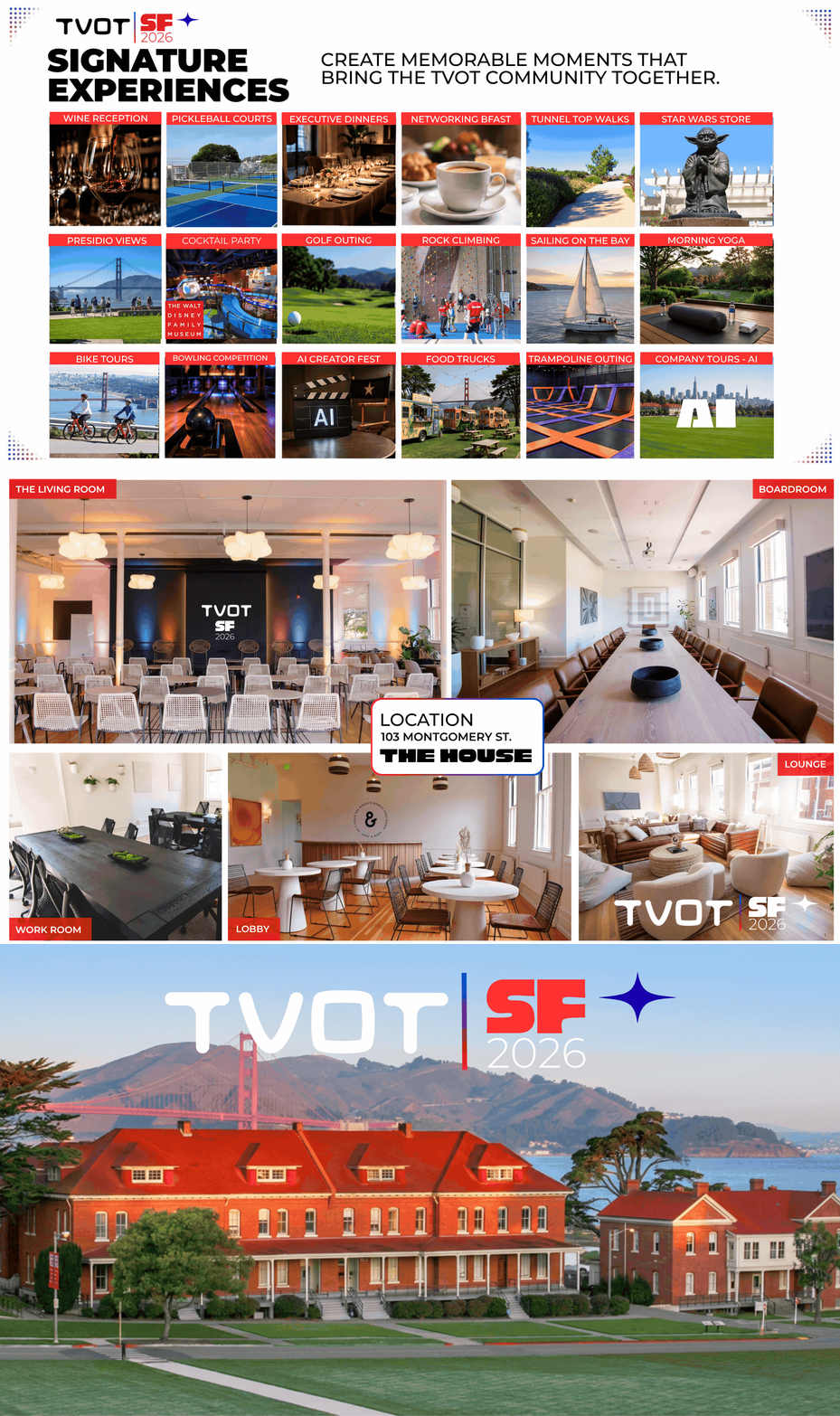
TVOT SF 2026 will offer sponsors a range of highly effective ways to drive awareness of their company and its solutions, including the ability to deliver a “Hot Topic” keynote, panel or mini-track to our audience of industry leaders; the ability to secure a private “Boardroom” briefing for demos and meetings; and the ability to sponsor breakfast, lunch, coffee, WiFi, the cocktail party and other high-visibility elements of the show.
In addition, companies can opt to sponsor golf or bowling contests, bike rides, museum tours, and other fun and memorable, community-building Signature Experiences and activities in the Presidio for their fellow attendees.
Please note that all TVOT sponsorship levels extend beyond the show itself, to offer year-round visibility in our ITVT newsletter, our Televisionation podcasts, our TV CONNECT community, and on our websites and social media channels.
In addition, we are very open to working with your marketing department to devise creative, custom sponsorship packages that are tailored to your company’s specific communications needs.
For more information on sponsoring TVOT SF 2026, contact ITVT Editor-in-Chief, Tracy Swedlow at: tracyswedlow@gmail.com or 415 608 4766.
SPEAK AT TVOT
We are now accepting speaker/panelist proposals, and welcome your suggestions for topics you would like to see covered on the event’s schedule. Uniquely among conferences, TVOT features an agenda that is developed through ongoing dialog with the industry. Please contact Tracy Swedlow, at tracyswedlow@gmail.com or 415-608-4766, to discuss your proposal. Also, please note that ITVT is not a pay-for-play organization and that speakers do not have to pay any fee to participate in our TVOT events.
ISSUES IN FOCUS
The ITVT editorial team develops the agenda for our TV of Tomorrow Show events through an extensive dialoguing process with the readership of the ITVT newsletter (which includes many key industry players), in order to ensure that each show covers all the issues that are currently of most pressing importance to the industry.
As a result, we typically announce the agenda just a few weeks before each show. However, some of the issues that we expect to explore at TVOT SF 2026 include:
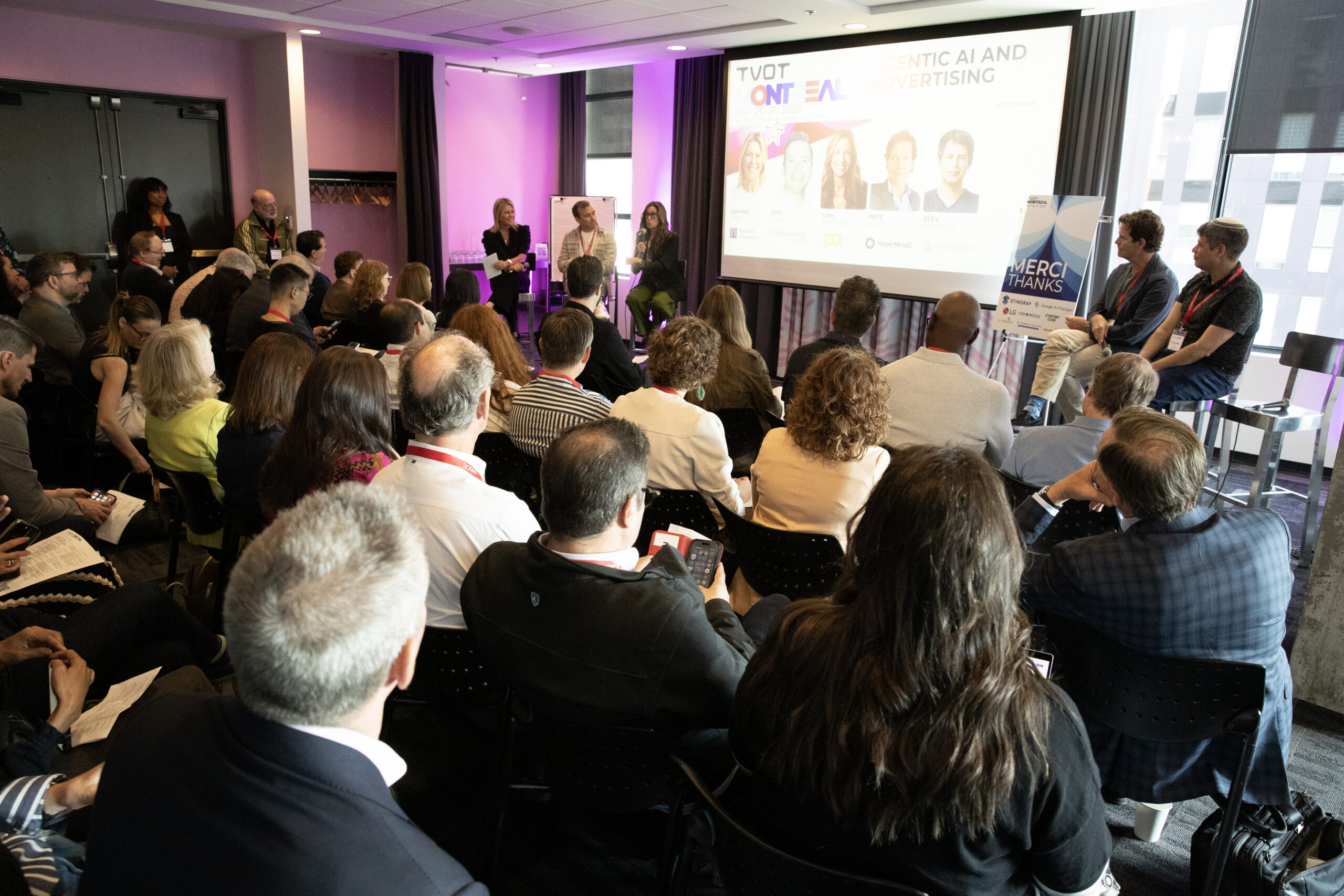
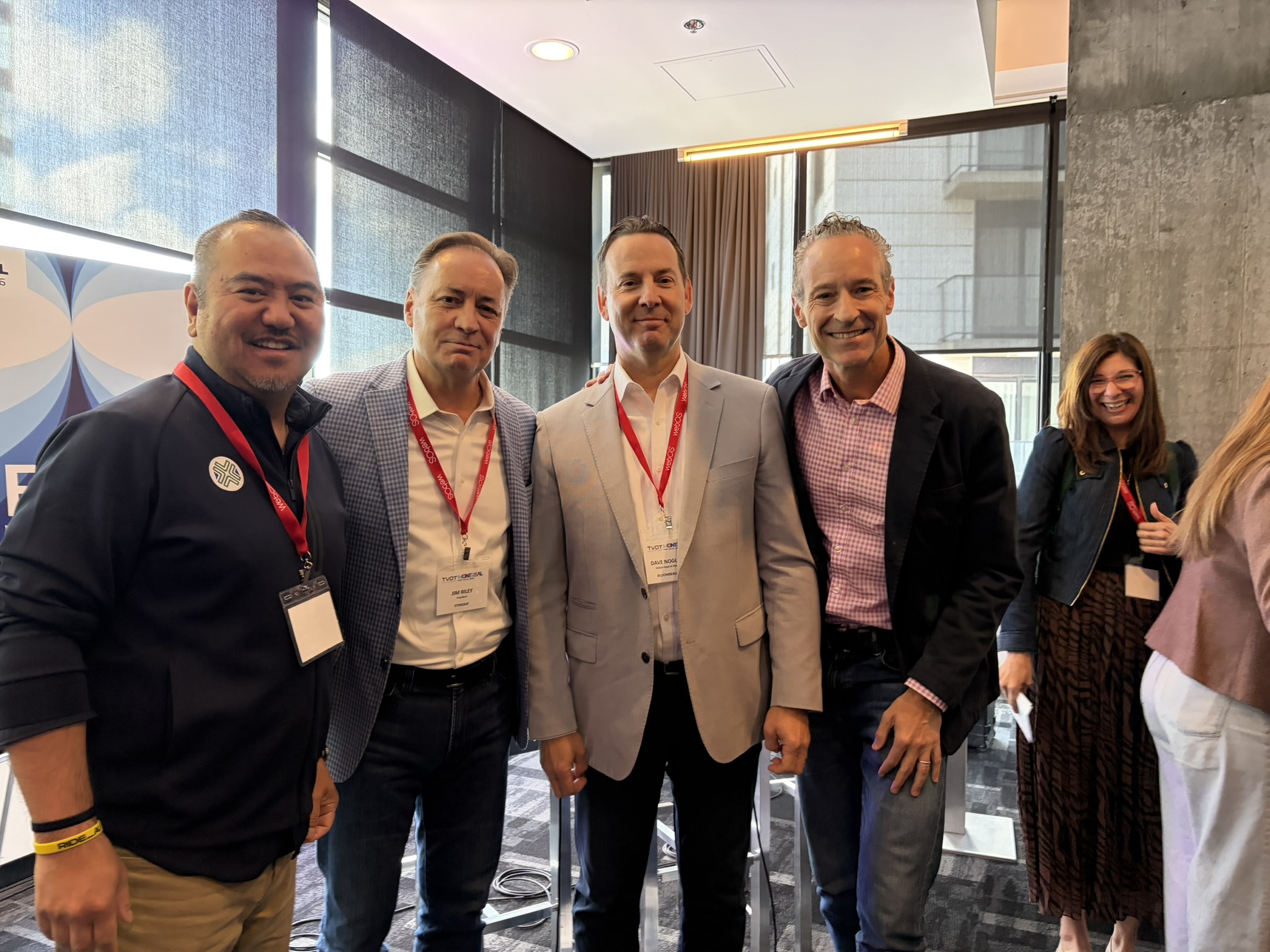
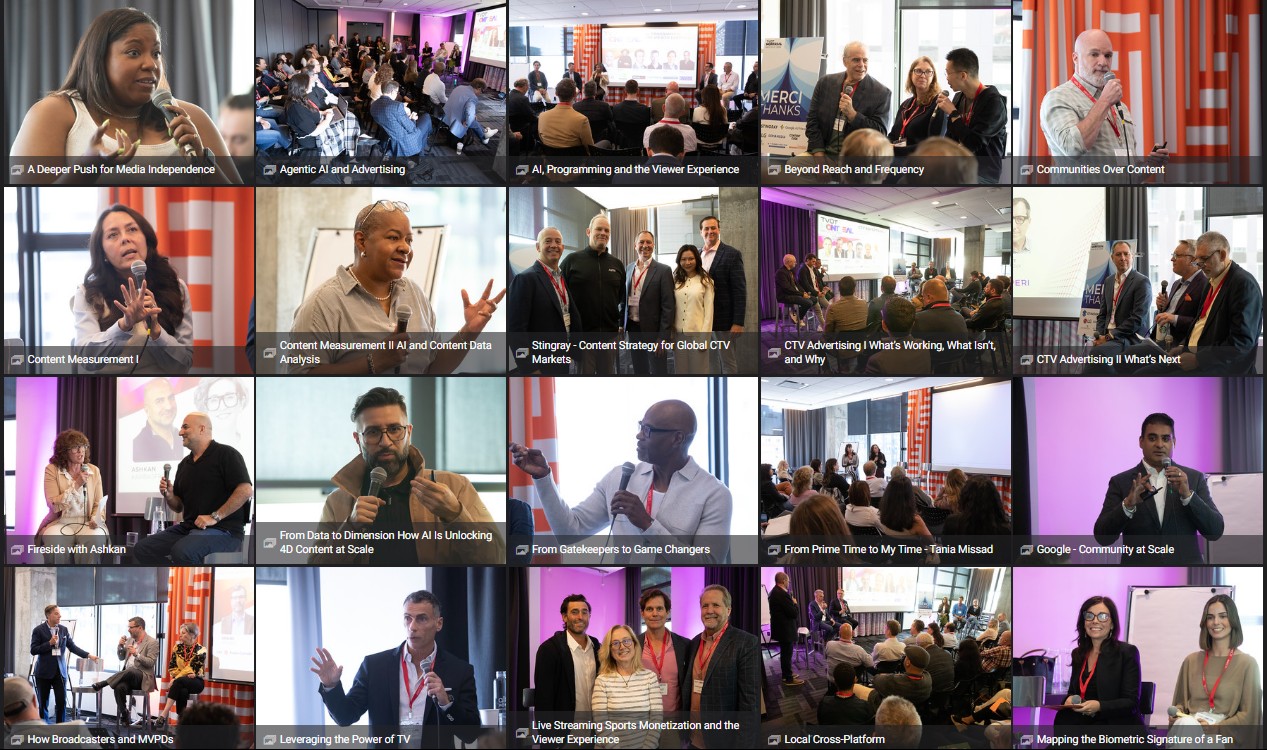
IMAGES ARE FROM TVOT MONTREAL 2026
- AI (including generative and agentic), addressable (including linear and non-linear), programmatic, contextual, data collaboration, audience-based buying and selling, attention metrics, retail media networks, shoppable TV, ad-supported tiers, micro-programming, ATSC 3.0/NEXTGEN TV, the TV OS, and more: Identifying and understanding the emerging technologies, platforms, monetization strategies, methodologies and media that will impact the television/video/advertising space going forward.
- Lessons from the field: How recent deployments of generative and agentic AI, addressable TV, shoppable TV, dynamic ad insertion, creative versioning, programmatic advertising/audience-based buying and selling, ATSC 3.0/NEXTGEN TV, direct-to-consumer VOD and FAST offerings, interactive programming and advertising formats, social TV, programming-discovery solutions, measurement and analytics currencies and techniques, and other advanced-TV/video innovations are faring in the real world; and what the success or otherwise of these deployments tells us about the business models for the TV of tomorrow. Which advanced-TV platforms, technologies, services and content offerings are attracting audiences and generating revenues today, how and why?
- The role that artificial intelligence (AI) will play in the evolution of TV/video advertising (including, for example, the use of agentic AI for media buying and of generative AI for advertising creative), audience measurement, data collaboration, programming development, distribution and discovery, and the viewing experience in general.
- The ongoing challenges involved in accurately measuring and understanding TV viewership on non-traditional platforms; and how advertising and audience measurement are being reinvented to take into account the ongoing, cross-platform evolution of viewing behavior.
- The future of panels.
- Understanding emerging measurement currencies: how should we expect them to evolve going forward, and what are the implications of a multi-currency marketplace?
- New developments in the TV Operating System (TVOS) space, and their impact on content providers, advertisers and other stakeholders—why is control of the TVOS becoming increasingly central to the industry?
- The growing importance of the CTV home screen.
- Understanding the potential of CTV for the advertising ecosystem—how is CTV enabling new forms of measurement, new kinds of data, new advertising formats, and new kinds of campaigns?
- The growth of CTV advertising in the local market.
- New functionality, viewer experiences and monetization models enabled by the incorporation of AI into CTV.
- Navigating the intellectual property issues raised by the use of AI to generate and enhance content.
- The increasingly important role that data and data collaboration are playing in television advertising: the new forms of data that are being generated by interactive, connected and social TV/video, how AI is impacting the analysis of those data, and how brands, agencies, networks and other stakeholders can work together to take advantage of the wealth of data now available to them to make campaigns more targeted, more accountable and thus more effective.
- Understanding outcomes: new developments in advertising attribution.
- The significance of new industry-wide initiatives in the advanced-advertising and audience-measurement spaces. How much progress has been made, for example, towards developing common measurement standards?
- Accelerating the transition from siloed buys to audience-based buying: how to get buyers to better understand audience-based buying’s benefits?
- The emergence of contextual targeting in advertising, and its potential significance going forward.
- Following the money: Which services are viewers spending their money on and why?
- Understanding the consequences (including the impact on programming strategies and content production) of the increasing importance of FAST and ad-supported tiers to the economics of streaming.
- Understanding the increasing importance of retail media.
- The emerging art of FAST curation: new tools and strategies for curating FAST channels to promote audience engagement and differentiation in the market
- The ATSC 3.0 (NEXTGEN TV) standard, and its potential to enable local broadcasters to generate new forms of data, offer new kinds of video and advertising services, and adopt new business models: will ATSC 3.0 put local broadcasters at the forefront of TV/video/advertising innovation?
- New advanced-advertising and streaming initiatives from local broadcasters.
- Understanding the art and science of brand safety.
- The roles that subscription-based, advertising-based and hybrid business models will play respectively in the future of streaming video.
- The role of niche content in the streaming space.
- How subscription-based OTT services can best address customer churn.
- The future of bundling.
- Microdramas and more: how content providers are responding to the growing popularity of short-form entertainment, especially among younger audiences.
- The role that in-car entertainment will play in the future of TV and video, as ridesharing and autonomous-vehicle technology become widespread.
- New developments in native advertising, branded entertainment, influencer marketing and episodic marketing–how are brands going about reaching an audience that has grown up with ad-skipping and ad-blockers?
- The potential of tcommerce/shoppable TV–whether on pay TV, broadcast TV, connected TV, second-screen devices or social-media platforms–to change the economics of television and advertising.
- The impact of new technologies (including, of course, generative AI) and social media on the TV/video news business–and thereby on the body-politic at large.
- The new programming formats, genres and viewing behaviors that are emerging natively on social-media platforms.
- The future of premium video in an AI world.
- Understanding the respective roles now being played by YouTube, Instagram, X, TikTok, Snap and other social-media companies in the television and advertising spaces–what are those companies’ TV/video goals, how likely are they to achieve them, and what do other stakeholders need to do in order to survive and thrive alongside these powerful players?
- How MVPDs are revamping their platforms, services, bundles and business models in order to counter the threat posed by cord cutting.
- The changing nature of TV sports, including the implications of sports-free “skinny bundles” and of subscription-based sports programming services targeted at cord-cutters. What are the prospects for televised sports, including live coverage, in an increasingly streaming ecosystem?
- The role betting and other interactive features will play in the future of live sports.
- The evolving relationship between the social-video creator economy and the television business.
- How questions of content discovery, navigation and personalization have become central to television’s future.
- The potential impact of ad personalization on measurement.
- How to provide viewers with a simple, consistent and functional TV experience, across the multiple subscription-based and ad-supported, linear and on-demand, streaming and OTA services they are using.
- The future of TV design: How to ensure that usability and high-quality design become a core element of the advanced-TV user experience, and not just an afterthought; strategies for designing consistent, cross-screen and cross-platform interactive video experiences; making the business case for good design; the complex and evolving relationship between design, data and content discovery/navigation; and the impact of new technologies (such as agentic AI and conversational discovery) on TV user interface design.
- Understanding international advanced-TV markets: opportunities and risks in Europe, Asia, Africa, Latin America and beyond.
- The impact of data-privacy initiatives on the television/advertising/data/audience-measurement industries.
- The current state of investment in the interactive/advanced TV space.
- The impact of ongoing and imminent mergers and acquisitions (M&A) in the advanced-TV and advertising spaces.
- The impact of Special Purpose Acquisition Companies (SPACs) on the television business.
- The latest tools for creating, delivering and testing interactive and multiplatform television.
- The increasing importance of fan communities in the development, promotion and monetization of programming.
- New developments in content distribution.
- How to reconceptualize advertising campaigns so that they engage viewers whose attention is dispersed across multiple screens.
- How to ensure that programming, advertising and the institutions responsible for them reflect and are responsive to the emerging viewing habits and increasing diversity of today’s Gen-Z and Gen-Alpha audiences and cultural influencers.
- The new advertising formats that are emerging in response to ongoing changes in how we watch television.
- How to address the problem of CTV ad fraud.
- How to solve CTV advertising’s frequency-capping problem.
- The future of the Upfront model—are we seeing a fundamental and permanent shift in how television advertising is bought and sold?
- How to identify, manage and monetize new social-video talent.
- Recent and pending developments in advanced-TV standards, and how these standards need to evolve going forward.
- The ways in which the ongoing evolution of the TV/video industry is impacting the role of the showrunner.
PHOTOS
All the Photos from TVOT MONTREAL 2026
All the Photos from TVOT NYC 2025
All the Photos from TVOT SF 2025
All the Photos from TVOT NYC 2024
All the Photos from TVOT SF 2024
All the Photos from TVOT SF 2023
Video Slide Show of TVOT SF 2023
Testimonials from past TVOT speakers, sponsors and attendees
MORE INFO ON TVOTSHOW.COM